August 22 – October 21, 2022
Artist Talk: September 22 @12:30 in person and on zoom
.
Merion Hall Gallery presents Social Fabric, a photography exhibition featuring Helen Maurene Cooper’s The Caregivers and Eric Kunsman’s Before Noon; two photography projects that explore lives and relationships that bond communities. Based in Philadelphia, PA and Rochester, NY respectively, the artists share their experiences living in neighborhoods that bring people together and face challenges as one.
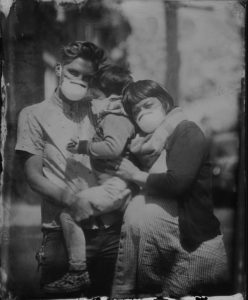
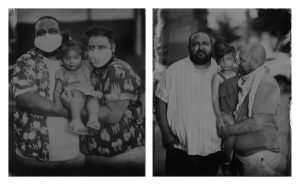
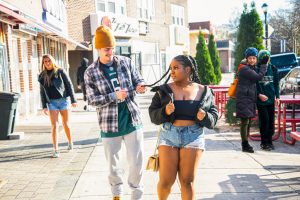
Helen Maurene Cooper’s The Caregivers is an ongoing social document of the photographer’s neighbors exploring caregiving among queer and heteronormative families during and after a time of self-isolation. The project began as a way for Cooper to meet and interact with her neighbors during the COVID-19 lockdown. After having moved back to Philadelphia from Chicago, Cooper found that she had not gotten to know her neighbors despite how densely populated her neighborhood is. During quarantine in March 2020, she saw an opportunity to meet these people by setting up her camera outside her home studio offering portraits to anyone willing to collaborate. By nature of many Philadelphians and because of the isolating conditions of the pandemic, people who passed her were “outgoing, forward, and nosy” enough to approach her and ask about the project.
Using an 8×10 camera and a photographic wet-plate collodion process, Cooper took a series of portraits for each couple or family that worked with her. During photography sessions, Cooper bonded with her community through discussions of parenting, caring for aging family members, and the difficulties of doing all this and more through a pandemic. From the start of COVID-19, the physical and mental demands for caretakers, especially women, became more extreme than they previously were. Through stories of nurturing and vulnerability from the people that Cooper photographed during this challenging time, the shared human experience of caretaking is revealed.
For the future of this project, Cooper hopes to rephotograph her neighbors over the years as a means to share what caretaking has been like for families both during and after COVID-19.
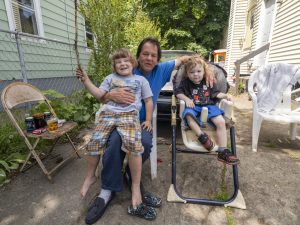
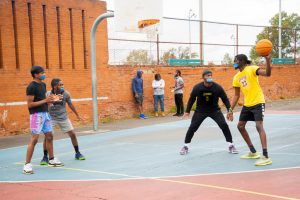
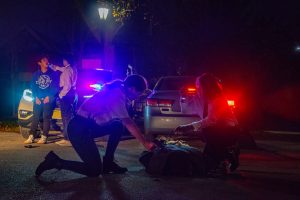
Eric Kunsman’s Before Noon captures the hopefulness found within communities living in areas with high poverty rates. Photographing people before the day has set in, as the title suggests, Kunsman finds how a fresh morning can bring positivity no matter what the situation.
Before Noon is a project stemming from his previous work, Felicific Calculus, which looked at the socioeconomic position of Rochester, New York and aimed to confute the negative stereotypes placed on it. In this new collection, Kunsman focuses on the people of Rochester and other poverty-stricken cities with a similar goal. Living and working in the city himself, the photographer approached neighbors he’s known for years as well as people he’s never talked to in hopes of showing how his community is happier than people make them out to be.
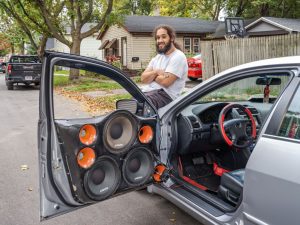
Hearing how people talk down about poor cities without having ever lived in one struck a chord with Kunsman. He describes how truly optimistic his neighbors can be and how their sense of community is invaluable. “Some of these people are a whole lot happier than the well-off neighbors I had in the suburbs,” he says. Whether it’s fixing someone’s broken down car or setting up a memorial for a lost one, these people look out for one another and find hope in unexpected ways.
Dee Feuda ’25, Gallery Exhibition Research Assistant
Maurene Cooper – “The Caregivers”
Helen Maurene Cooper, from the Caregivers, Bea with her Dads, Sauce and Daniel, Wet plate collodion process (ambrotype on clear glass) one- of- a- kind image,
(left August 2020, right July 2022).
The Caregivers addresses the emotional and physical labor of parenthood and romantic partnership in my community during a global pandemic.
Using an 8×10 camera, the wet plate collodion process (ambrotypes) and the sidewalk in front of my home studio, I make portraits in public space of families and lovers.
Over a series of multiple sessions, I collaborate my subjects to tell intimate stories of how they nurture, support and protect each other. Through gesture, expression, the placement of bodies and the manipulation of perspective, I depict a wide range of queer and heteronormative families who live within walking distance of my front stoop. I use these portraits as a means to explorer caregiving not as a given role for a women but with the context of queer and feminist thought that sees this labor as a radical act.
The work weaves together a narrative of world-building, using public space and the politics of family and intimacy during a period of self-isolation.
Eric Kunsman – “Before Noon”
Boom Car Pride, 15”x20”, Archival Pigment Print, 2022
Before Noon is a new series that explores the power of hopefulness of the people in cities with extremely high poverty rates, the idea is that every individual has the whole day ahead of them before noon and a clean slate prior to the weight of the world setting in on any given day. Often, the weight of the world can take away the smiles one may have in the morning or lead to individuals relying on other means to help forget about that weight and feel carefree.
I want to show each individual’s hope, and community rather than the blight and misfortune many photographers focus on when not engaging with one’s surroundings. Yes, some photographs show the deterioration of the cities I am photographing, but those images do not contain individuals. Those images set the tone of the perseverance of the individuals living in these cities throughout the United States.
Nasir Chandler, Rebekah Fiori, Grace Gallagher, Annie Meko, Keely Nilan, Diego Ramirez, Caitlin Thiel, Elizabeth Wash
Isabella Africa
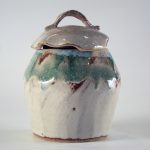
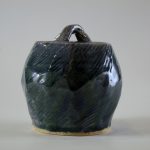
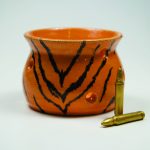
This organic kitchen set, titled An Open Eye Into Nature, combines elements of nature and the external world with ceramic objects that are used in a household environment. My idea for this series came about while walking through campus and noticing the beautiful trees, various textures, and delicate flowers. I simultaneously saw many students traveling to class, heads down, staring at their phone screens. Feeling as though no one else was observing the details of the environment, I wanted to make this project a reflection of the beauty I saw while also creating functional objects. I feel transforming nature into something functional will make people notice and admire it more. While clay is the main medium of this series, other materials were used in creating the surface. Leaves from the campus garden and surrounding SJU area were used to create imprints on some of the vessels. Other pieces in the collection include handmade elements that add to the surface design. Examples of these include leaves, a mushroom, and coils to represent branches. The collection as a whole, aims to encompass all the different colors, textures and shapes of nature while working together as a cohesive set.
Sunbowl
Pitcher
Lidded Vessel
Blue Lidded Vessel
Jayne Baran
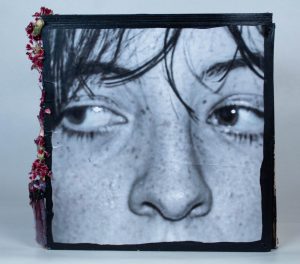
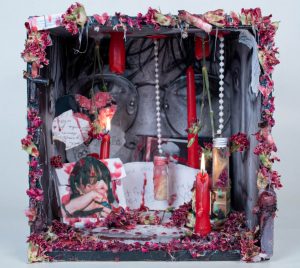
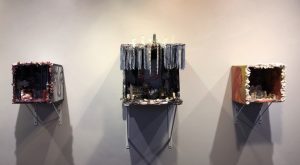
My series, It’s Never Too Late to Have a Happy Childhood, consists of three shrines built to explore themes of vulnerability in grief, personal growth and its ties to spirituality. I lost my father in the summer of 2020 and have used this series to document my personal growth through loss. I am exploring the idea of spiritualizing one’s own life and experiences and what that does to one’s personal power. My shrines aim to delve into the idea of everyday rituals, and the conscious and unconscious rituals people undergo to become who we are. In It’s Never Too Late to Have a Happy Childhood, I aim to illuminate the structure laid out in Arnold van Ganeep’s, Rites of Passage, breaking a rite of passage into three separate stages which work in tandem with the three works: separation, transition and incorporation. Given this, each work has its own title: Rituals of Sacrifice, Rituals of Liminality and Rituals of Return. In the work, I’m aiming to illustrate how we use rituals and shrines as a way to mitigate fear and gain a new clarity after trauma. The process of creating the shrines in and of itself has reflected the ideas of the work, of spiritualizing my life and turning an arbitrary ritual into a spiritual one. The wooden boxes I built consist of photographs I have taken over the course of two years, mostly self portraits, and various collaged objects sourced from thrift stores. In my work, I aim to create something holy that I have not been able to find in organized religion and to really examine what a time of tremendous growth looks like in tandem with grief.
Hunter Barkhorn
I take pictures of almost anything, it is what calms me down in life. I do this because I find joy in the process and I intend to extend that joy to the viewers of my work. Photographing nature gives me peace, even though the weather doesn’t always cooperate. There are difficult days, rainy days, long drives, overcast days, but this only makes me take better pictures. I mainly take pictures of nature because I love the outdoors and how beautiful this world can be. I want to show that in the crazy world we live in today, there is still beauty in nature that in turn is reflected in the people in this world.
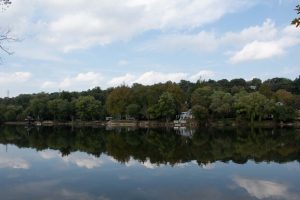
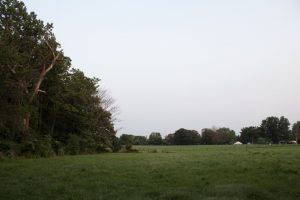
For Nature’s Beauty, I focus on the beauty of nature and how humans interact with it to shed light on the good in this world that we live in. I am doing this by photographing places that attract many people. Most of these locations are in Pennsylvania, some are of the Philadelphia suburbs and other photographs are taken in rural parts of Philadelphia as well as parks throughout Pennsylvania. When I go to these parks it is a very peaceful environment and I capture the moment how I see it. I look for open spaces where I can capture a wide view of the expanse of nature. I am drawn to very quiet places, I do not like having too much activity in my images. This series focuses on what I see in nature everyday; showing my viewers the beauty of the world from my perspective. Whether it is a picture of trees with a river or just a picture of land, I am highlighting the beauty of what surrounds us. These images are meant to counter the difficulties we have all faced during the pandemic, I am capturing these moments to show individuals the amazing healing properties of nature. When everything seems impossible or difficult, just take a step outside, whether it’s at the beach, or in the forest, or even just a field, to take a look at what this world can offer us. Nature is one peaceful, healing and beautiful space item that we have left, cherish it.
Nasir Chandler
As an African American artist, I believe that my art allows me to create a visual representation of what I believe, what I’m passionate about, and what my purpose is. With photography, my work creates narratives surrounding specific issues and subjects which raise societal awareness, specifically issues in the black and brown community. This series, Black & Brushed Aside, references the major racial injustices and problems that we face. These issues include: political redlining, views of how unprofessional our culture is, the disrespect and sexualization of black women, the suspicious assumptions of a black man’s appearance, police brutality, and how society stereotypes our professions categorizing our intelligence and feelings as less than or illiterate. While these situations continue to occur, many individuals will want us to ignore them, force us to “get over it”, or utilize other issues to protest against our racial difficulties. My goal is to present an emotional set of photographs that portray many of the issues that are currently affecting in the black community. Each photo represents and references historical or real life situations that have happened. The purpose is to raise awareness and understanding of the problems that I see and why these issues should gain more attention, while many people in society try to force us to ignore them.
Rachel Cosgriff
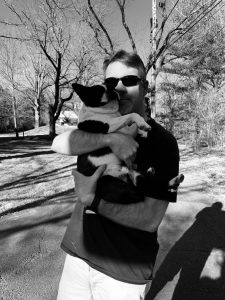
I am an artist that uses photography as a medium to highlight the important issues of today. With this project, I am focusing on issues and narratives surrounding addiction and mental health. As my own father suffers from some of these issues, I have truly seen the instabilities and complications that life can create. I wanted to reveal my father as a whole person, featuring our great memories and the things he has taught me growing up. Addiction does not define someone, and that is an important message I want to convey through this series. Influences like Ansel Adams and Robert Frank, pushed me to use black and white photography for this work.
Grace Coyle
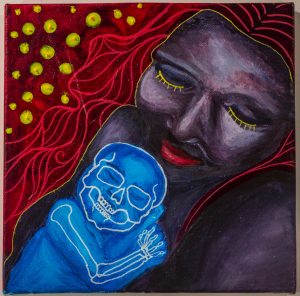
I draw inspiration in my work from emotional responses. I aspire to visually capture the complexities of emotion to spark a connection with my audience. I have always considered myself articulate, however in terms of the connections and feelings that overwhelm me, I have struggled to understand and communicate the various layers of these experiences. My work explores the parallel between connection and innocence. I am inspired by events in my life that have caused intense levels of emotions. I recognize and admire these experiences as events that have ignited extreme levels of personal growth.
In Entrance to Emotions, each piece attempts to dive deep into an emotional response due to a loss of connection. Using acrylic paint on various sized canvases, I work to combine my surrealist style and realist techniques with line detailing to portray a raw understanding of grief. I am excited by various interpretations and connections to themes that may not be intended in the work. This is a representation of personal deciphering of my own experiences of connection.
Sophia Dell’Arciprete
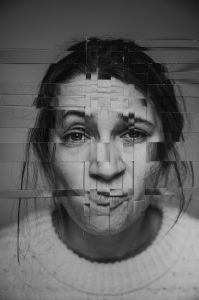
My work explores the relationship between women and growth. The series, Pieces of a Woman, 2021, explores the idea that “pieces” of ourselves are taken away from us through our life, and in turn we also are constantly adding “pieces” to ourselves. These growth moments are so crucial to one’s development as a person, especially as a woman. I chose to photograph women in my age bracket and because I identify as a woman myself. For the past couple of years, I have habitually written letters to my future self to read. These letters serve as reminders to myself of how far I’ve come and why I deserve to exist. In the studio, I asked each of my subjects to write a letter to themselves, reflecting on where they would ideally want to be in their future; the parts of themselves they would want to grow, “add” or remove. Visually, I take notice of central themes in each of their letters and collage different portraits from the session into one. The physical manipulation of the images represents those “pieces” taken away from us, but also the “pieces” we use to reform ourselves anew. This is something we do everyday and will continue to do for the rest of our lives. We are constantly building ourselves to be something better, and it is my purpose to visually manifest this through these portraits.
Grace Gallagher
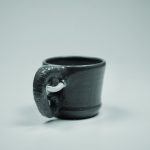
For my current project, “Killer Humans”, I decided to create a series of clay animals that are endangered due to humanity’s impact on the environment. When you think of sharks or rhinos or tigers most people think they are killers, when in reality we are more dangerous than they are. I want the viewer to look at these pieces and feel moved to make a change to help this planet and the animals within it. This series incorporates sculptural and functional ceramic work, both which reveal some of the reasons why these animal species are endangered. I have a mug with an elephant trunk sculpted onto the side to form the handle; The tusk that has been cut off to represent human poaching. Poachers will cut off their tusks and sell them illegally and trade them for ivory. I also have a bowl with features of a shark on it, because people cut off their fins illegally to make shark fin soup. This bowl has a lid with a shark fin handle to represent humans taking off the fins, like taking off the lid. When the fins of sharks are cut off they throw them back into the ocean still alive, since they do not have fins they are unable to swim effectively and end up sinking to the bottom and suffocating or being eaten by other predators. I want people to know what is going on around the world and show them how much of an impact we can really make. In the future, I want to continue to bring awareness to situations like these and show people how powerful our actions can be.
Rebekah Fiori
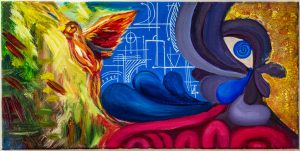
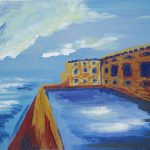
My work displays my perception of life as a painter. Using vibrant acrylic colors, I paint on various sized canvases images of people, places and things that hold personal meaning and express my unique experiences. My goal is to invoke inspiration and wonder in my audience and introduce them to a new way of seeing the world, and their own lives through an impressionistic painting style. My series is titled,“ Col Tempo “, which in Italian, bears the meaning “with time”. The paintings I create contain deep personal symbolism and ideas rooted in the phrase “Col Tempo” . The work represents both the changing and the unmoving, the past and the present, the moments we grasp onto and the ones we keep creating and experiencing.
Annie Meko
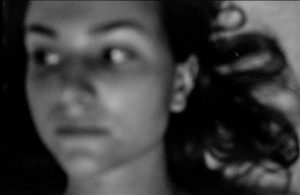
As the role of social media has evolved, sharing images of one’s true self has become very rare. This film photography series is meant to show the beautiful flaws that are exposed once the polish and edits are gone. I used film photography because it is in itself imperfect. Film gets dust, fingerprints, and streaks on it, and when taking self-portraits with a film camera it is often difficult to get perfectly adjusted, crisp images. Self-portraiture has always been a focus in my work because of the difficulties that come with taking, working on, and sharing images of yourself. While I enjoy working in a studio environment, I want to continue to explore personal spaces as art as well and a reflection of oneself. Especially today, with the rise of Instagram, the true self is often difficult to love and share with others. The Self in conjunction with one’s personal and private living space is an important and intimate relationship. This project aims to share true, raw images of a young woman existing in her own space as she is, and to show that imperfect images can be even more beautiful and meaningful than perfectly edited ones.
Patricia Neal
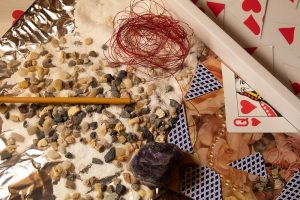
As an artist, I like to explore the theme of family and roots. My series YesterYear consists of still life photography, which responds to collected family photographs. Each image is constructed from objects with symbolic meaning. I begin each photograph by laying down a surface and then I construct my sets often using different types of fabric, mirrors, paper, jewelry and household items. I often use mirrors as the walls of my image to create illusions within the space and color of the image.
I use archived family photos and pair them as diptychs with these newly constructed images. I deconstruct the archived photos, taking the colors and items seen in the image to create a new one. To connect the images together with their assigned family photograph, I use lighting gels to mimic the color and feel of the light within the family images. This allows for the color palette to stand out as the two images are presented as a unified pair. These original family photos span from the 1940s to the 1990s. In these photos, I use a layering technique where I stack the items so that only parts are seen, creating depth in the image, forming a 3-dimensional sort of collage. I place the objects in a particular composition and choose whether or not to have a central subject.
My inspiration for my work comes from the exploration of trying to find a connection to the past. I like to think about what has been passed down from family and how many things occurred for us to be where we are now, at this time. With my work, I use my own family’s history and experiences in pursuit of expressing often underrepresented aspects of the Black American family, as well as unravelling the idea of purpose and belonging.
Keely Nilan
I created ‘Love Lines’ as a tribute to my loved ones. I have difficulty vocalizing my emotions, but this project serves as a visual representation of the feelings I have for these extraordinary people.
I have always been fascinated by hands and the stories they tell. Hands are the vessels that create artworks, mend broken bits, plant flowers, and embrace one another. Looking down at the intersecting lines of a palm, I knew one day I wanted to create something that captured the dynamics of a person, their hands, and my love for them.
Each piece is about 16 by 20 inches and features a black and white photo of a family member’s hands doing an activity that is familiar to them. Choosing colors representative of each person’s aura, I wove thread in different styles and directions throughout each piece. I combined my appreciation for the simplistic, traditional nature of black and white photography and colorful, textured embroidery to communicate the everyday intricacies of love.
One of my key philosophies is to create art that is fun and free. In every other aspect of my life, I am reserved, quiet, and somewhat shy. But the use of acrylic paint, watercolors, paint markers, acrylic ink, and self-portraiture helps me release the feelings I hide. It is like a stream of consciousness turned visual. I often don’t know what the artwork is about until it is done, which leads to deeper understanding of the subliminal.
Diego Ramirez
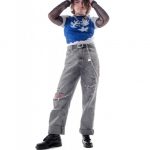
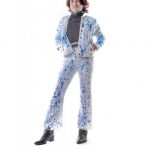
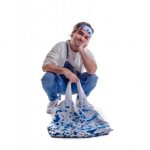
The main focus of my series “Sun Printing, but Make it Fashion” is fashion sustainability. Clothes are the second biggest polluter in the world with large amounts ending up in landfills that take forever to decompose. “Fast fashion”, is the mass production of clothes that are usually being made by exploited workers in third world countries. Much of this type of clothing is what ends up in landfills. A main combatant against “fast fashion” is thrift shops.
The methods used in this series involve me either creating and sewing my own clothing or acquiring the garments from consignment stores. I am implementing upcycling into my project by taking something old and turning it into something new in a sustainable way. In an attempt to combine both my photography background and my new aspiration for fashion I decided to use cyanotype as a natural dye on my clothing garments.
Using Jackson Pollock inspired “paint splatters”, tie dyeing, or soaking the entire fabric I can change the color and add personality to certain garments. The cyanotype process involves brushing or painting a light sensitive solution onto a substrate, once dried you expose the substrate to sunlight and it turns into a rich blue color. It is used as an alternative photographic process. You could say that my coworker throughout this project would be the Sun. This ties in with the environmental aspect of work which involves using what is available to us in order to create art in a sustainable way.
Once each garment is designed and crafted, I take these pieces and generate a high fashion photoshoot with the garments. By using myself as a model, I am connecting myself to these pieces and showcasing how they can be worn and used. This brings me to my secondary focus in my work which is, gender inclusive fashion. Anyone can wear whatever they want that makes them feel comfortable and confident. Humans are complex creatures and we need various outlets to express ourselves. Having a gender binary restricts and limits creativity and self-expression.
Everyday people should be able to wake up and choose what they want to wear that day that will make them feel happy, regardless of what gender the clothes are assigned by society. I want people to think “I would wear that” when they look at the work in this series. I want people to start thinking of ways that they can be more sustainable when it comes to clothing, and not restrict themselves when it comes to what they want to wear.
Caitlin Thiel
My series “A Love Letter to the City” reflects on and explores my personal relationship with the city of Philadelphia. The places featured in this series of photographic postcards represent the most important places to me surrounding my experiences in Philadelphia. While this series highlights more of the touristy and eye-catching destinations in the city, I am not naive to the challenges people face here. I recognize that there are struggles in Philadelphia such as gun violence and poverty. However, in my series I wanted to focus on the beautiful aspects of the city, and why they are important to me.
I grew up in suburban New Jersey, and it was boring. There was nothing to do within walking distance, and life seemed slow. The one bright side of growing up in the suburbs was my proximity to the city. I love the city of Philadelphia. Some of my best memories have been here and my work conveys the gratitude I have for it. I went to college here, I had my first internship here, I discovered what career I wanted to pursue here, working in entertainment and social media. Equally as important, I discovered my passion for photography.
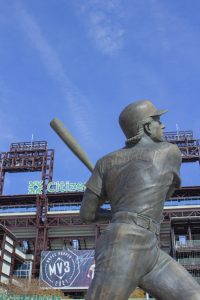
One of the first places I can remember going to in Philly was Citizens Bank Park. My family is huge Phillies fans, so we would go to games every summer when I was growing up, and this was my first real exposure to the city. When it became the time for me to choose a college, I chose to attend Saint Joseph’s University. I felt that going to school in Philly would give me opportunities that I would have not had in suburban New Jersey. During the summer of my junior year of college, I had my first internship in the city with WaWa Welcome America. I remember how stressed and nervous I was on the
first day of this internship. I had to meet everyone at The Giant Paintbrush which is a location that did not come up on Apple Maps. This internship really helped me to solidify my career goals. This series highlights locations in Philadelphia combining them with a written component that expresses my gratitude for the city.
Elizabeth Wash
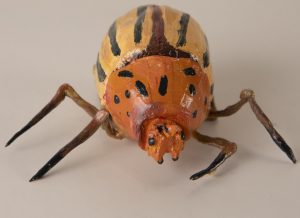
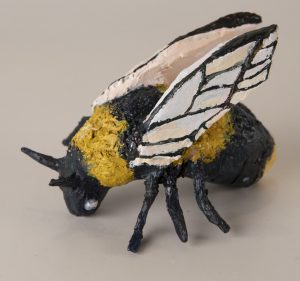
This project, titled “Colligo” is my premier exhibition of ceramic work. “Colligo” is a highly detail-oriented collection of ceramic insects presented in the form of an entomologist’s assortment. Each individual insect works in singularity and as an integral component to the cohesive collection, representing a single iteration of one organism, but collectively forming a crawling conglomeration.
The key idea behind this work is to shed light on the idea of collection. We as people are collectors of things– of memories, of experiences, of events– these things compile to build individual humans with unique existence. Physical relics remind us of people and places and represent intimate relationships with these memories. A celebration and integration of my relationship to the natural world informs my fascination with insects, and their preservation. Bugs are living organisms that through preservation, adorn our walls and pepper our science classrooms. Their chitin exoskeleton retains their form and allows people to see a livelihood captured in time. Noticing the small things in life and paying excruciating attention to the intricate details of these bugs is a commonality to my work, as I continually have a personal stash of found treasures. By presenting a collection of animals that would regularly be overlooked, this project functions to bridge the viewer to the microscopic beauty that surrounds us and represent the idolatry of nature.
The process of this work is akin to its content, with an emphasis on connection and creation within nature. The majority of the material for this project is composed of various clays with a surface treatment of acrylic paint. I work using a handbuilding technique that allows me to make a physical connection to each subject I work on. Inspiration is drawn from photographs or, when available, through dead insects that have been found. These models serve to provide an accurate figure to my naturalistic work and style.
This exhibition serves to celebrate the idiosyncrasies of collecting and how this contributes to a person at large. Through utilizing a realistic approach, I am showing an appreciation to the natural world as I share with the viewer an enticing array of insects.
The Experimental Digital Photography class explores the physical nature of the photographic image. Moving beyond the traditional flat picture plane and exploring photography as part of sculpture and installation is an important part of this course. Students constantly question what a photograph is and can be. Discovery, play and inquiry are fundamental parts of this class.
SOPHIA DELL’ARCIPRETE
Sophia takes a deeper look into what it means to be a mother and a woman. Sophia interviewed her mother who answered by telling stories about her children. She also spoke about her childhood and how losing her mom affected her parenting style. Sophia laser engraved her mother’s stories word-for-word overtop of portraits taken on black and white 120 film. She then scanned the negatives, made slight adjustments and printed them digitally.
FINN MONAHAN
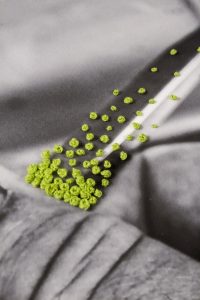
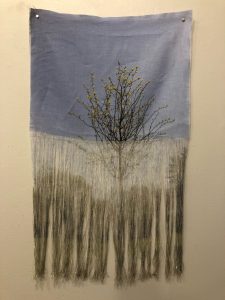
Inspired by artist Leyla Cardenas, Finn chose to create work highlighting environmental issues and climate change. Choosing to remove threads from the images shows the slow decay of Mother Nature and the negative effects of human intervention.
CASEY CLEMETSEN
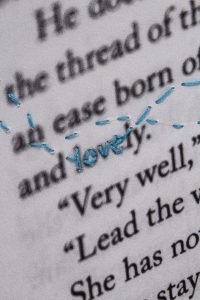
Casey’s work focuses on discrimination and gender gaps in the work force. She chose four fields where there are few women or women have a difficult time projecting themselves in this career due to misogynistic thinking. Those fields being politics, sports, science, and construction/ engineering. After photographing items that symbolize these career paths, she then embroidered the photographs, a process typically seen as feminine. By contrasting these two elements she aims to raise awareness of gender inequality and gender stereotypes.
TYLER SWITALA
This piece comments on litter and our environment. Last year the United States taxpayers spent nearly $11 billion cleaning up litter across the USA, 10 times more than the cost of trash removal. Tyler photographed beautiful nature reserves and hiking trails of Mills Reservation County Park & Wissahickon Park and contrasted the beautiful shots of nature against pieces of white or clear plastic trash. The juxtaposition of image and material brings awareness to the issue of human pollution.
NASIR CHANDLER
Many people, especially women, are victims of sexual abuse, sexual assault, sexual harassment, and rape. Many of the victims are 12 years old or even younger. While many criminals responsible for sexual abuse have been given the punishment that they deserve, the actions of other criminals, for some reason, have gone unpunished. Many people justify the actions of these criminals with excuses such as “boys will be boys,” or “maybe she should watch what she wears.” Nasir’s images bring text and identity together to personalize the victims and educate viewers.
ERIN KELLY
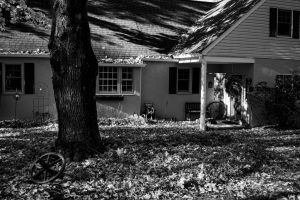
Things are not always what they seem. This piece narrates how society teaches us to trust and believe in only the things we can see and judge by appearances. This distrust and negation of the socially unacceptable is reflected in everyday society, people and politics. We have become a vulnerable society believing only what we see to be the truth.
HUNTER BARKHORN
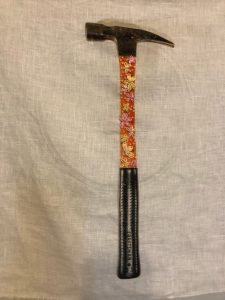
Many people see only the good in their surrounding easily overlooking the human effects on the environment. The natural disasters in this world such as forest fires and hurricanes, as well as air pollution and water pollution are caused by society’s imprint on the environment. Hunter’s piece depicts the contrast of good and bad in our surroundings. The cartoonishly cut shapes represent the government’s refusal to seriously address these events and larger environmental issues.
RACHEL COSGRIFF
“I had an eating disorder for 2 -3 years and it took a lot for me to overcome it. At this point in my life, I am flourishing like never before and am the healthiest I have ever been (mind and body).” Rachel depicts her personal life story in this piece. Through photography she displays her emotions and trials of living with anorexia. The subject (Rachel) is dark, sad and struggling. The flowers on the skirt represent Rachel’s current situation –flourishing, happy and healthy.
Gallery Talk 9/21 12:30-1:30 – Sorry this event has been cancelled!
Join Justyna on Friday, the 24th to hear her speak about her work and tour visitors through the gallery. Hope to see you there!
Gallery walk through with the artist 9/24 4-5 pm
In conjunction with Philadelphia 20/20 Photo Festival
If unable to join in person, please join us live virtually via zoom!
Justyna Badach’s “Proxy War” exhibit features 16 large-scale gun powder and casein dichromate prints that comment on propaganda of war. The rather innocuous images come to life after examining their explosive composition and pernicious origination. The ISIS video stills which are the backdrop for the prints work in tandem with the authentic ISIS titles and Russian and American proselytizing language to illustrate the cunning methods used to turn violence into proud moments of male camaraderie. Badach’s work acknowledges the modern technology and social media used to attract followers, glorify military operations and emotionally desensitize viewers to the brutality of war.
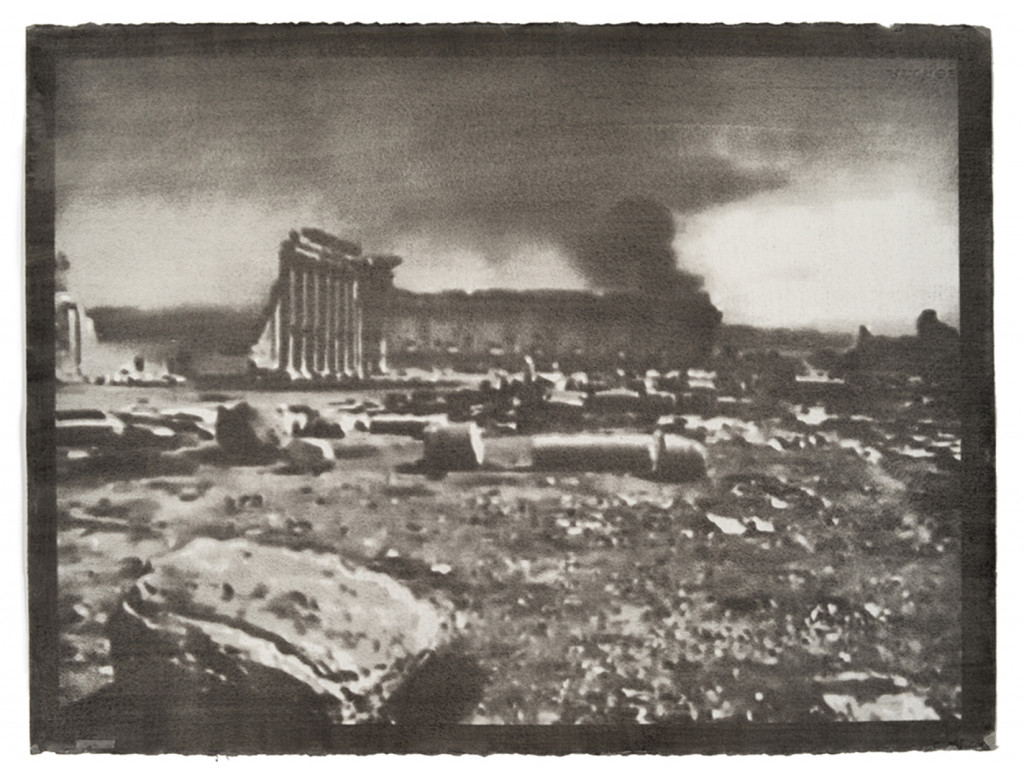
Palmyra, 2016
casein dichromate and gunpowder on watercolor paper
22×30 inches
Palmyra is an ancient Neolithic Semitic city in present-day Syria. The image shows the damages of a bomb dropped on the ancient city, leaving the ruins filled with the smoke of war. Palmyra contains a clear message that demonstrates one of ISIS’s goals: to destroy ancient monuments and cultures that go against their standards. This image is particularly emblematic of the way history occurs and is not unique to ISIS solely. Indeed, erasing all traces of previous cultures constantly happens during conflicts. The destruction of Palmyra is no different from Europeans sacking the Middle East in the past. Ultimately, ISIS was not the first nor the last to harm ancient history.
– Rebecca Elbaze, Gallery Exhibition Research Assistant
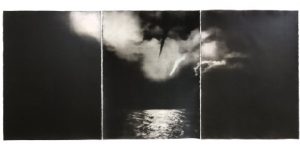
Diplomatic Pressure, 2018, Gunpowder with casein dichromate on Arches, watercolor paper, 30×68”
Diplomatic Pressure is a triptych depicting a US missile attack falling from the night sky above the Syrian sea. Although its setting is on Islamic land, this image is a direct still from a US film about the War on Terror in the Middle East. In response to Bashar al-Assad attacking its own people with chemical warfare, the US sent missiles towards Syria, ironically bombing those who were just injured. The title gives immense context to the image. Indeed, Diplomatic Pressure was the exact term used in a US press conference in relation to the previous bombing. However, this image demonstrates the various meanings of what one’s perspective of diplomatic pressure signifies compared to another. – Rebecca Elbaze, Gallery Exhibition Research Assistant
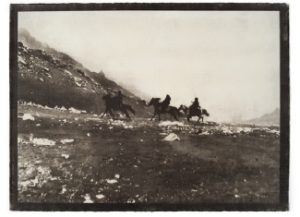
Killing the Apostates In Revenge For the Monotheists, Khorasan, 2016, Gunpowder and casein dichromate on Arches watercolor paper, 22×30”
Obtained directly from an ISIS recruitment video, this image depicts three men riding on horses’ back in the vast desert of Afghanistan. The location is of utmost importance because it shows the connection between ISIS and the Taliban. In the quest to recruit Taliban and other Middle Eastern fighters, ISIS cleverly incorporates symbolism in this scene that recalls Arabic folklores, which would appeal to the male audience. Furthermore, to attract fighters from overseas who may not be aware of ISIS visual tropes, ISIS applies their knowledge of Western and cowboy films visuals that appeal to and charm the foreign male audience. – Rebecca Elbaze, Gallery Exhibition Research Assistant
Philadelphia-based artist Justyna Badach examines the hyper-masculinity and violence in the modern-day military and war propaganda in two incredible projects named Land of Epic Battles and Proxy War. In this series of large hand-made prints, Badach captures direct stills from ISIS recruitment videos and US and Russian’ War on Terror’ films about the Middle East. Badach’s inspiration for this project comes from her early work called Epic Film Stills, which focused on landscapes and explored how classic American Westerns glorified these places of genocides. In a new era of streaming and filming in 2014/15, Badach wanted to revisit the project by focusing on what masculine tropes looked like in today’s media. With the industry changing, ISIS recruitment videos circulated on the internet using similar visuals that American Western films used. ISIS is well aware of the Western appeal, and as Badach said, “It is a global language that terrorist groups understand very well, and they are appropriating it for their own purposes.”
Badach purposely used black powder in her prints in homage to the World Trade Center bombing; the dangers of using this black powder matched that of the subject matter. Black powder is an early form of gunpowder, but differs from modern gunpowder in that it is not smokeless. The process turned out challenging for numerous reasons. Shortly after 2001, black powder was put on a restricted list. Badach underwent an extensive search before a small gun shop finally sold it to her, “no questions asked,” for testing. Black powder is very difficult to combine with photographic material, and it took an entire year before Badach mastered the medium.
Land of Epic Battles’ images are titled after ISIS’s recruitment videos in which they appear. The titles are of utmost importance because they give context to what may not be inherently apparent to the naked eye. Badach mentions that “ISIS had a very specific titling sequence that they used,” so that the videos can easily be accessed by searching certain words to attract potential fighters from all over the world. ISIS strategically creates recruiting videos for different audiences by making them in several languages. The text only images are actual subtitles from the recruiting videos targeting an English or European audience. These prints demonstrate Badach’s concept that words are as powerful as imagery.
Proxy War demonstrates the Russian and US war propaganda films, and thus is an extension of Land of Epic Battles. Proxy War’s images are titled after what was said in the videos and US press conferences about the Middle East wars. Badach confirms the importance of viewing Proxy War and Land of Epic Battles side by side because “[The images] are from the same site; even if the story is told from a different point of view, it is still propaganda.” The triptychs are some of Badach’s favorite frames because of the arduous process which creates a deeper connection between artist and print. Each print requires four to six layers of coating and Badach says, “every additional coating is a risk for the print to get ruined.”
Badach explains that focusing on the hyper-masculine violence in this exhibit was significant because “as a woman, I am their primary victim.” Women and children suffer the circumstances of war, and it was crucial for Badach to have a voice and document the consequences of war. This project correlates with the current tragic situation in Afghanistan in many ways. Several pieces on display show locations in Afghanistan, such as Killing the Apostates in Revenge for the Monotheists and Bamiyan. In their recruitment films, ISIS purposely incorporated images that were appropriated from the Taliban because both terrorist groups actively recruit each other’s fighters. Bamiyan shows the site that once held a colossal ancient statue of Buddha destroyed by dynamite by the Taliban in 2001. ISIS includes images from the Taliban in their film because their actions are very similar; destroying ancient buildings and monuments, as seen in Palmyra #2. Badach warns the viewers that ISIS is “not so different from the Taliban, as they are the same thing under a different name.” It is crucial for the public to see this exhibit to raise awareness of war propaganda and better understand Afghanistan’s current events.
– Rebecca Elbaze, Gallery Exhibition Research Assistant
Bio
Badach arrived in the US as a refugee in 1980. She received her MFA from the Cranbrook Academy of Art and currently resides in Philadelphia, where she is an artist, educator, and museum professional. Her work has been exhibited extensively throughout the United States and abroad. Solo exhibitions include: Light Work Syracuse, White Columns New York, Gallery 339 Philadelphia, Blue Sky Gallery in Portland and Contemporary Art Center in Las Vegas. Badach’s images have been included in over 30 group exhibitions, most notably at the Michener Museum, Rick Wester Gallery, Catherine Edelman Gallery and the Australian Center for Photography. Her work has been reviewed extensively and images have been featured in Wired Magazine, Contact Sheet, F-Stop Magazine, Dummy Magazine and several exhibition catalogs. Badach’s work is the permanent collections of Portland Art Museum, Museet for Fotokunst Brandts, Odense, Denmark, Center for Photography Woodstock, Cranbrook Museum of Art, Rice University Library, Houston, TX, Temple University, Philadelphia, PA and Haverford College. She has been awarded an artist residency from Light Work, and grants from the Pennsylvania Council on the Arts, Leeway Foundation and The Independence Foundation.
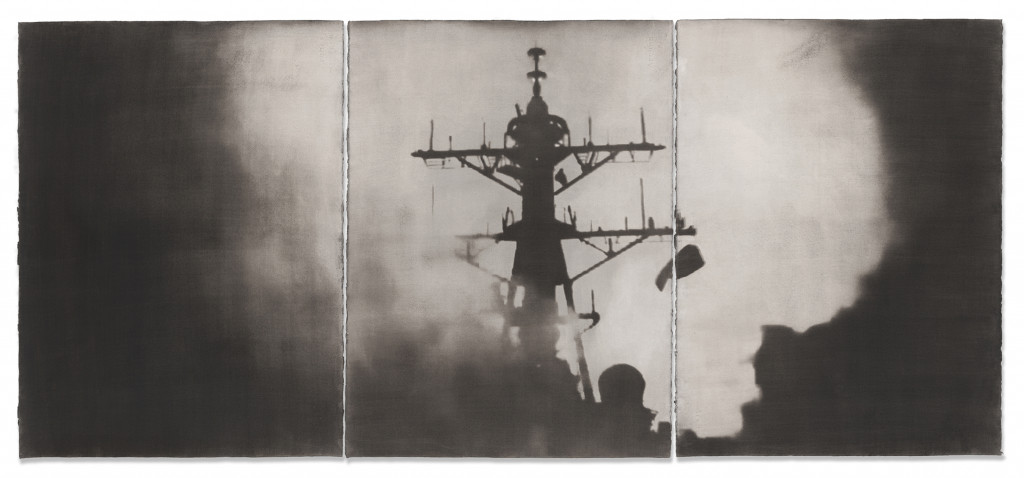
Beyond a Red Line, 2019
casein dichromate and gunpowder on watercolor paper
30×68 inches
Artist Statement:
“It is evident . . . that terrorist organizations, alongside transnational corporate interests, are one of the more vigilantly opportunistic exploiters of ‘events, spasms, ructions that don’t look like art and don’t count as art but are somehow electric, energy nodes, attractors, transmitters, conductors of new thinking, new subjectivity and action.’”
—Seth Price from Dispersion, 2002
My work examines the transmutation of history and repackaging of violence though appropriation and re-contextualization of images derived from films created for a male audience. My latest project, Land of Epic Battles and Proxy War are comprised of large-scale, prints made using gun powder. The images depict scenes culled from the online archives of ISIS recruitment data streams as well as American and Russian military internet propaganda, released as part of the ongoing war in the Middle East.
Today the great landmarks of tradition have been destroyed, but without society proposing new ones in their place. In a recent book, La Vraie Vie, Alain Badiou conceptualizes male adolescence, “as the experience of disorientation following the dissolution of the patriarchal symbolic order in the West. For boys and men . . . there is no clear exit from the symbolic disorientation in a capitalist desert where traditional rites of initiation into adulthood such as a job and marriage no longer operate. . .. So, in the happy, anxious void where the Law of the Father once spoke, we now have revenge porn, trolling, and terrorism. Their nihilism is a mix of sacrificial and criminal heroism, and a general aggression toward the Western world. This aggression is based on forms of traditional and identitarian regression, on the debris of tradition that are offered to them.” Land of Epic Battles (2015-2018) focuses on the hyper-masculine, violent world of ISIS recruitment videos that grew out of these socio-economic, technological and cultural shifts that are occurring on a global level. Disseminated via YouTube, as well as through private, encrypted internet subscription channels, ISIS data streams are endemic of the larger proliferation of computer files and digital “info-war” visuals that are provided on demand and watched by choice, negating concerns about legality and morality that have traditionally defined mass-media content. Similarly, Proxy War (2018-present) examines the parallel world of Russian and US military internet propaganda that grew out of “the war on terror” and seeks to glorify military operations taking place across the Islamic world. As these two adversarial nations compete to maintain their sphere of influence in the region, they, like ISIS, employ the pervasive glorification of violence and wanton destruction as a tool to motivate their “followers”.
Working from the position of both censor and video editor, I isolate the single frames depicting sites that serve as backdrops for these displays of male camaraderie, acts of violence, and mutilations. The resulting screen captures do not overtly display the acts violence. Instead, the images give form to the info-war coded lexicon of methods, signs, and symbols of contemporary warfare. Through this coded iconography and the destructive potential of the gunpowder that is used to make the images, the violence of the source material is registered.
In Land of Epic Battles, the title for each image is taken from the ISIS video episode in which the image appeared, drawing our attention back to the horrific acts disseminated by these streams. These titles, such as The Necks Cutting; Crush Your Enemies; or My Revenge, lend context and form to what at first glance may seem like a series of random objects and sites. An image that resembles a graphite drawing of an empty truck in the desert or a helicopter hovering in a cloud-filled sky is indeed innocuous, until we’re told that the context is ISIS-produced media and that the print itself is made of explosives. The appropriation of language is also an important to the understanding of Proxy War, which take their image titles directly from language used during US and Russian press conferences on the war in Syria, Iraq and Afghanistan.
Land of Epic Battles and Proxy War become the means through which we witness the pernicious forces at play in contemporary internet war media that employs the sophisticated tools and visual vocabulary of virtual reality games, reality TV, and DIY videos. Employing and subverting methods commonly used in the entertainment industry, ISIS and the military create media, that feeds on viewers’ addiction to social media, exploits the voyeuristic lure of reality TV, and nourishes their audience’s desire to watch what is socially taboo.
One of most striking features of the ISIS DIY “video streams” is their slick production strategies, and like the military messaging, their ability to continuous morph their distribution channels in order to avoiding attempts at image suppression or origin verification. It is clear that our collective experience is becoming increasingly fragmented and the reality of global vents is being defined and shaped by surreptitious media producers and algo-rhythms designed to getting as close as possible to viewers. As such, Land of Epic Battles and Proxy War registers the initial signs of a larger impending seismic shift that will inevitably alter our future collective experience and understanding of conflict and war.
5 – 6 pm: Boland Hall Gallery Reception – Boland Hall is exhibiting the work of Susan Fenton’s SJU photography students from the past 20 years.
6:15 pm: Merion Hall Gallery Talk given by Larry Spaid
7 – 8:30 pm: Merion Hall Gallery Reception
A Survey, showcases over 50 pieces from the beloved and talented photographer, artist, and teacher, Susan Fenton. Susan was a self-taught studio photographer whose work has been exhibited extensively nationally and internationally. She obtained her Bachelor of Studio Art Degree from the Tyler School of Art at Temple University where she also received a Master’s in Art Education. Susan obtained a second Master’s Degree in Fine Arts from The Mason Gross School of Art, Rutgers University. She participated in artist residencies in California, France, and Ireland. In addition, she taught abroad at Temple University Japan in Tokyo as well as for Saint Mary’s College and Notre Dame University in Rome.
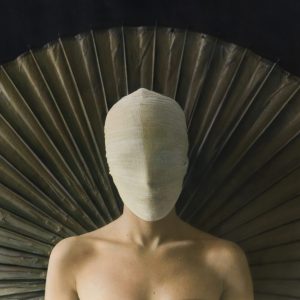
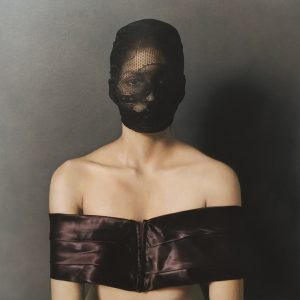
Selected series of work represented in this exhibit include: Rome, Barbie,Nocturne, White, Ballingen, and Fatima. Nocturne and Fatima are traditional black and white photographs that feature selenium-toned gelatin silver prints (Nocturne) and gelatin silver prints (Fatima). A great majority of Susan’s photographs are hand-painted gelatin silver prints recalling her formal education in painting. She did not start practicing digital photography until later in her career as seen in her Baroque series. This exhibit shows a wide variety of Susan’s interests. One overarching aspect in her figurative work is how the identity of the model is hidden and camouflaged to emphasize the form of the subject. Despite the use of models in many photographs, Susan’s art was not about portraiture, but rather the essence of a still-life or as in her Baroque series, the ambience of thematic stories.
Influenced by Moorish art as well as artists such as Vermeer, Caravaggio, and Giorio Morandi, Susan eloquently combines the classical elements of their work with expressive photographic techniques that create a powerful, but soft aesthetic unique to Susan Fenton’s work. A true studio artist, every photograph is meticulously planned out to the smallest detail. In referring to Susan’s artistic process her husband Larry Spaid says:
“I know Susan loved research, traveling and experiencing crazy places….it all filtered into her work.”
Also featured in this exhibit are a series of watercolor paintings that Susan worked on while traveling. Rather than using a camera to document travel she used this painting technique, over a four year period, as a journal and later in her studio as a reference. In addition, the exhibit features a film by John Thorton and a slideshow from one of Susan’s numerous academic lectures. These help illuminate her detail-oriented and thorough examination of subject matter in her chosen area of research.
~ Rowan Sullivan ‘20
Gallery Exhibition Research Assistant
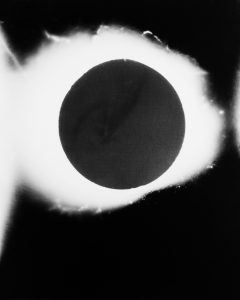
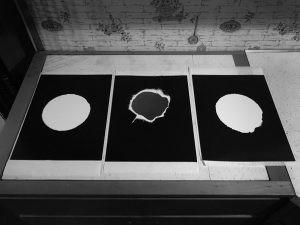
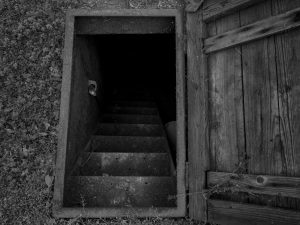
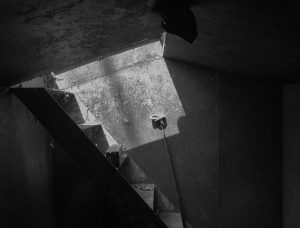
Shelter is a project visualizing time spent underground in Oklahoma storm cellars. These cool, dim spaces are both havens and tombs. Mattern uses the cellar as a life -size camera with the air vent as the lens. The result is an abstract arrangement of celestial circular forms mimicking these cellars that punctuate the landscape of the mid-west.
Andy Mattern utilizes unique methods of photography to create the images found in “Shelter.” The storm cellars, so prevalent in the central United States, act as Mattern’s “camera.” Mattern uses the air vent as the camera lens; pressing light sensitive paper up to the vent allowing the only available light to filter through creating a lone image. What emerges is a rather unusual image, a black and white abstract orb. “It is barely even an image,” says Mattern, “yet the images capture the impression of the place, with the focus being on the interior.”
The name “Shelter” refers to the fact that this project took place inside of Oklahoma storm cellars, or storm shelters, where local people take refuge during tornadoes. In this exhibition, the photographs are intentionally scattered to mimic an aerial view of Tornado Alley in Oklahoma. This was a new experience for Mattern, one where he “felt like a tourist,” as he had never been inside of a tornado shelter before this project. Having to go door to door asking to be let into the cellars, Mattern soon found a “welcoming environment” in this unfamiliar location. He notes that this new, albeit scary, location allowed him to feel connected to the community around him. Perhaps this speaks to this universal understanding of shelter, and the consolation it can bring in the most dire of circumstances.
~ Maggie Nealon, ‘20
Gallery Exhibition Research Assistant
Andy Mattern is represented by Elizabeth Houston Gallery, New York

 .
. 

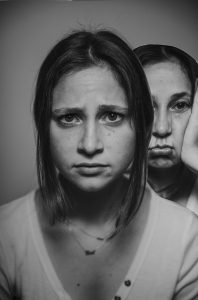





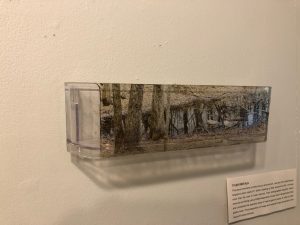

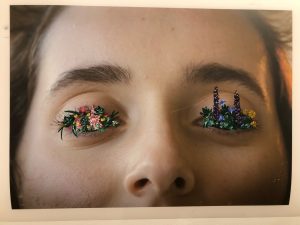 Things are not always what they seem. This piece narrates how society teaches us to trust and believe in only the things we can see and judge by appearances. This distrust and negation of the socially unacceptable is reflected in everyday society, people and politics. We have become a vulnerable society believing only what we see to be the truth.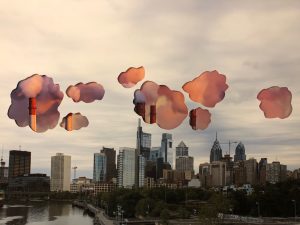
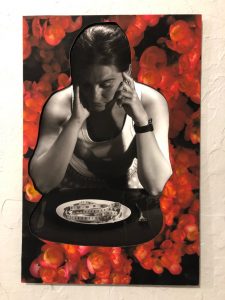 “I had an eating disorder for 2 -3 years and it took a lot for me to overcome it. At this point in my life, I am flourishing like never before and am the healthiest I have ever been (mind and body).” Rachel depicts her personal life story in this piece. Through photography she displays her emotions and trials of living with anorexia. The subject (Rachel) is dark, sad and struggling. The flowers on the skirt represent Rachel’s current situation –flourishing, happy and healthy.